More and more parents in High Wycombe and across the Chilterns are asking schools and pre-schools whether they offer Forest School. It is easy to see why. Children who spend regular time learning in nature tend to be more confident, more curious and better at working together. This guide explains what Forest School is, what children actually do and why it is so valuable in the early years.
What Is Forest School?
Forest School is an approach to outdoor learning that takes place regularly, over a long period, in a natural setting such as woodland or a wild area of school grounds. It is child-centred, which means children’s own curiosity and interests guide much of what happens.
It is different from an occasional nature walk or a trip to the park. Children return to the same place again and again, in all seasons and most weathers, so they become familiar with it and grow in confidence over time.
What Do Children Do at Forest School?
Sessions vary with the age of the children and the season, but may include:
- exploring and noticing changes in plants, trees and wildlife
- building dens and shelters
- hunting for minibeasts
- making art from sticks, leaves and mud
- imaginative play and storytelling
- climbing, balancing and moving over uneven ground
- learning to use simple tools, with close adult supervision
- gathering round a campfire, for older children and in suitable settings
The Benefits of Forest School for Young Children
Confidence and self-esteem
Forest School gives children the chance to take on small challenges and succeed, such as climbing a log, building a shelter or finding a rare beetle. Each success builds a sense of “I can do it”.
Resilience and managing risk
In a supervised setting, children learn to judge risk for themselves: how high to climb, how to cross a muddy slope, how to use a tool safely. Learning to manage small risks builds resilience and good judgement.
Teamwork and social skills
Many Forest School activities are collaborative. Carrying a heavy branch or building a den together teaches children to communicate, share ideas and cooperate.
Language and communication
Nature is full of things to talk about. Children learn new words, ask questions and describe what they discover, which supports communication and language, one of the prime areas of the Early Years Foundation Stage (EYFS).
Physical development
Uneven ground, climbing, digging and carrying all build strength, balance and coordination. Picking up small objects and using tools strengthen the fine motor skills needed for writing.
Understanding the world
Watching seasons change, finding creatures and exploring plants help children understand the natural world through first-hand experience, and develop a sense of care and respect for it.
Wellbeing
Time outdoors in nature helps many children feel calmer and happier. Children who find a classroom setting challenging often flourish at Forest School.
Is Forest School Safe?
Forest School is carefully planned and supervised. Leaders assess risks, set clear boundaries and teach children how to stay safe. The aim is to manage risk sensibly, not remove every challenge, because that is how children learn.
How Parents Can Support Outdoor Learning
- Dress for the weather and embrace mud
- Explore local green spaces together, such as The Rye, Wycombe’s woodlands and the Chiltern Hills
- Collect natural treasures and talk about what you find
- Let your child lead and follow their curiosity
- Praise effort and bravery, not just results
Forest School at Crown House
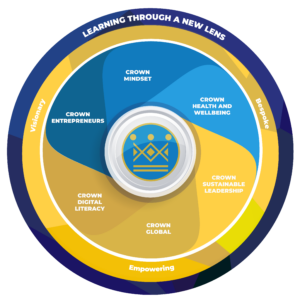
At Crown House Preparatory School in High Wycombe, Forest School is part of our early years curriculum. Sessions help our youngest children appreciate nature and learn to work as a team, and they complement specialist drama, music and PE lessons. Together, these experiences help build the qualities we look for in every Crown House Learner: resilience, reflection, creativity, and kindness and tolerance.
Learn more about how our pre-school works in our guide to choosing the right pre-school in High Wycombe.
Frequently Asked Questions
Children can enjoy Forest School from the early years. Activities are adapted to suit their age and stage of development.
Waterproof trousers and coat, wellies or sturdy boots, and warm layers in colder months. Choose clothes that can get muddy.
Usually, yes, with the right clothing. Sessions are only cancelled in unsafe conditions such as high winds or storms.
Forest School builds confidence, resilience, teamwork, language and physical skills, and supports children’s wellbeing and love of nature.